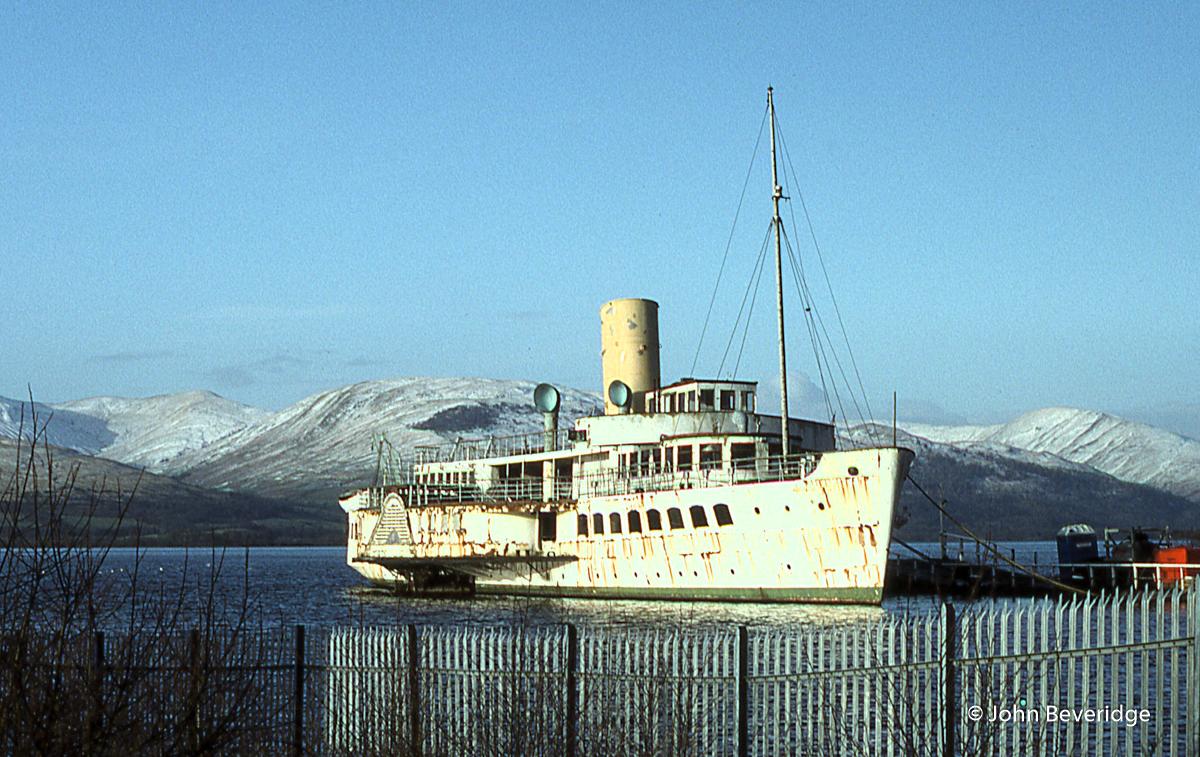
A forlorn Maid of the Loch lies rusting at Balloch pier in January 1993, but on an even keel
1982-1996 : “That Sinking Feeling”
Thirty years ago this year (2026) a group of people were given a 555 ton paddle steamer — free of charge — and £75,000.
In this exclusive series of articles for CRSC, John Beveridge recounts the story of the campaign to save Maid of the Loch. The information comes from official minutes and correspondence, his diaries and other sources over the (almost) forty years that he was involved. While he has endeavoured to keep it factual these are his own words and thoughts and not those of the charity.
This story would not have been possible without the commitment, sacrifice, and determination of scores of volunteers, public support, individuals, companies, and funding organisations.
The history of Maid of the Loch can be found elsewhere, so this story is of my personal involvement and starts in 1982 when I was single, living in Paisley, and at the start of my career in environmental health. Through the Paddle Steamer Preservation Society, I tried to persuade CalMac to keep her sailing; then a campaign via the media, MP’s, etc. to “save” her; then backed by Douglas McGowan and Terry Sylvester we supported a bid to buy her. The ‘Maid’ was only 28 years old and operational for barely three months of the year so her machinery had really only been “in steam” for 7 years. All attempts were unsuccessful.
I kept in contact with each new owner, and although they respond with grand investment ideas, nothing came to pass. The closest I got was to meet the Managing Director of Alloa Breweries in 1986 and get approval for a team of volunteers to cover the decks of the ‘Maid’ with visqueen sheeting to prevent further rainwater damage to the decks below, and to persuade them not to use an hydraulic propulsion system, but keep her steam machinery.
That same year I got a job as Depute Director of Environmental Services with Argyll and Bute Council and my wife and I moved to Lochgilphead. I still kept a watching brief on the ‘Maid’, but while subsequent owners did reply to me no work was ever done on the ship and she visually and structurally deteriorated.
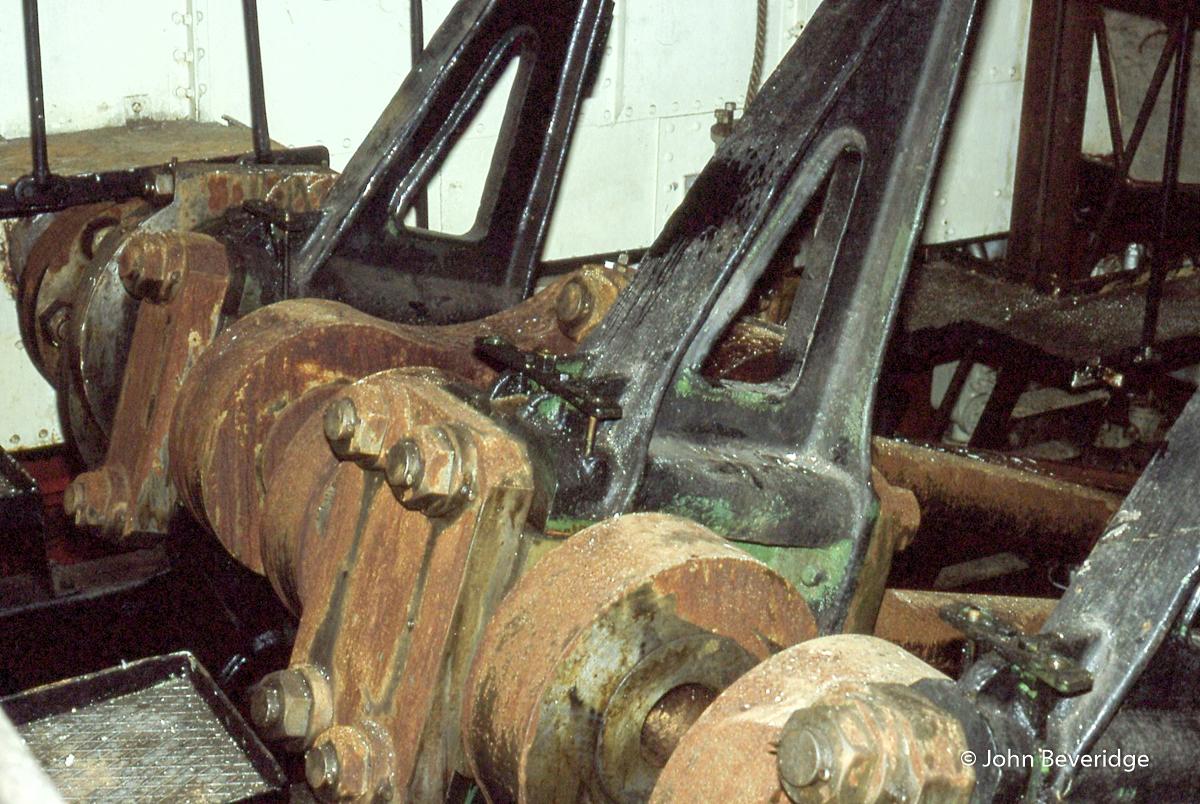
Main engine rusted up and with fittings removed 1992
In 1990 I was appointed Director of Environmental Protection & Leisure Services in Dumbarton District Council and living in Helensburgh with a young family. That made looking out for the ‘Maid’ easier. The steamer had been sold again but the Newcastle company went into liquidation and I could get no answers. As I drove to work on 6th March, I noticed men with oxyacetylene cutters on board and contacted the police and alerted a fellow director. It turned out that this was an illegal attempt to recover anything of value to pay off debts. While the police were able to stop this, many of the fittings, brasswork, and even the electric cables which were sheathed in lead, had been removed. Worse, the vessel was so full of rainwater that some of the portholes were below the level of the loch, and a few were smashed or broken. It would only have been a matter of days before she had filled with water and sunk at the pier. I got council workmen to pump her out and after emergency talks with councillors, we put a 24 hour security guard on duty.
I found myself in a very awkward position. As a chief official I had to be apolitical and give professional advice. At the same time it was quite clear that I had an interest in saving the ‘Maid’. I sought advice from the Chief Executive, and declared my interest to Provost O’Neill (Labour), and leader of the opposition Councillor MacKechnie (SNP). Both were supportive, and I had many “behind closed door” talks with each of them.
Then began very lively debates in the council chambers on what, if anything, to do next. In discussion with the politicians and other directors, I managed to persuade them to continue the 24 hour security until the position of the liquidators became clear. After some months, the council decided to put in a bid for the the ‘Maid’, Countess Fiona, and land. The decision was based on acquiring the land in order to prevent future development. The bid was successful and ownership passed to the council in December 1992.
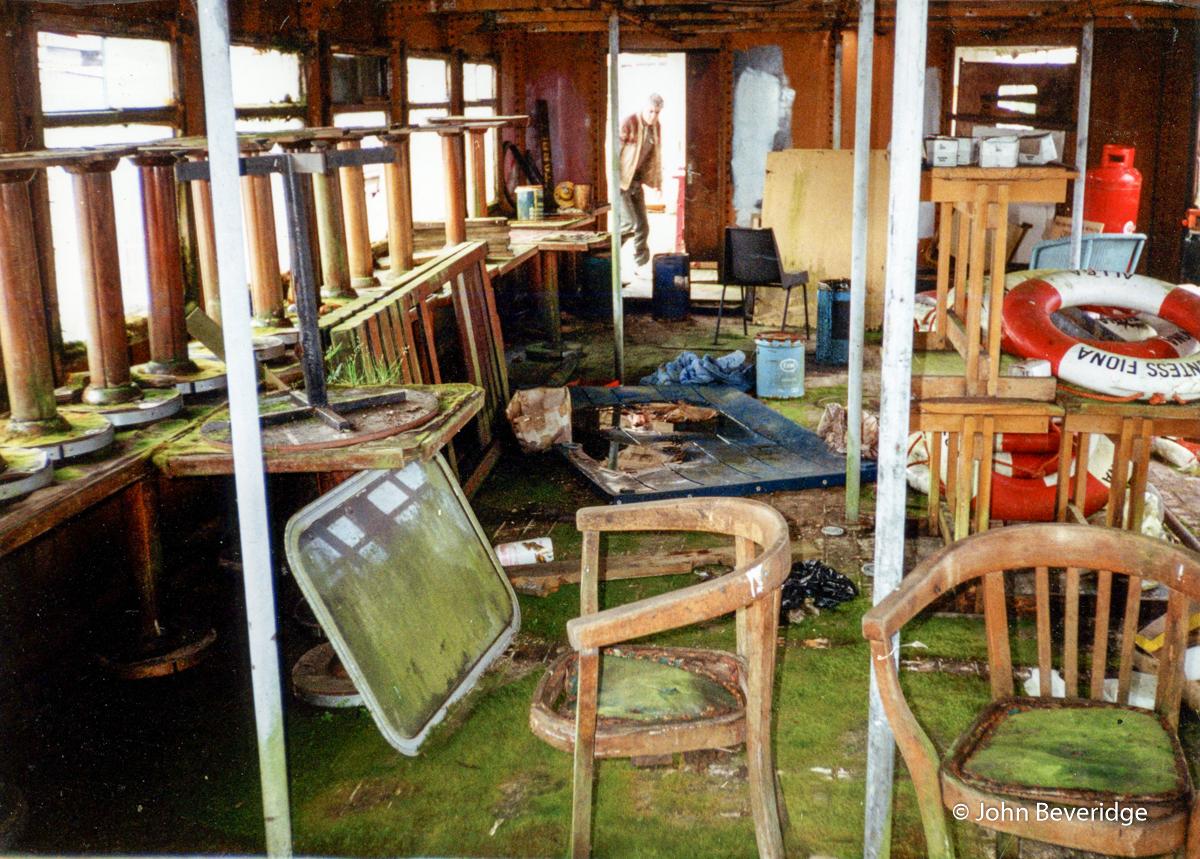
The promenade deck lounge bar on 8th May 1993. Green moss and algae, windows broken and most fittings ruined
It is worth pointing out that Dumbarton District Council did not have a particularly strong investment in tourism or publicity and had absolutely no interest in owning a paddle steamer!
I recognised that Maid of the Loch was almost the “forgotten paddler” to enthusiasts compared to the Clyde steamers. So here was an opportunity to draw attention to the ‘Maid’ and garner support for her future.
Over the next few months I managed to attract TV, radio, and the news media to the plight of the ‘Maid’. The Provost appeared on television and in newspapers (this long before the internet and social media) and gave him and Dumbarton (and the ‘Maid’) unheard-of positive publicity. We even attracted BBC TV’s “Challenge Anneka” but when they visited the ‘Maid’ it proved too much of a challenge, even for them. The publicity did result in a van from Newcastle returning telegraphs, binnacle, and other items taken from the ‘Maid’ — along with an apology!
One of my council responsibilities was for Libraries and Museums (where we kept the returned artefacts) and I got my staff to put on an exhibition about the ‘Maid’ and loch steamers. CRSC was represented by Graham Langmuir and the exhibition travelled around the district. This good news story helped persuade the council to accept advice from the PSPS to commission a feasibility study into the future of the ‘Maid’. I also was allowed to start work parties aboard in the summer of 1993. Throughout May and June we turned up every weekend to clear the ship of all the debris, watchdog poo, and paint her from bow to stern. It was hard work, but glorious weather, and we got the ship’s power working, launched the lifeboats, and had fun. By the time the ‘Maid’ reached her 40th birthday, visually, she looked ready to sail! The Provost was invited to cut a celebration cake, and we again achieved front page news.
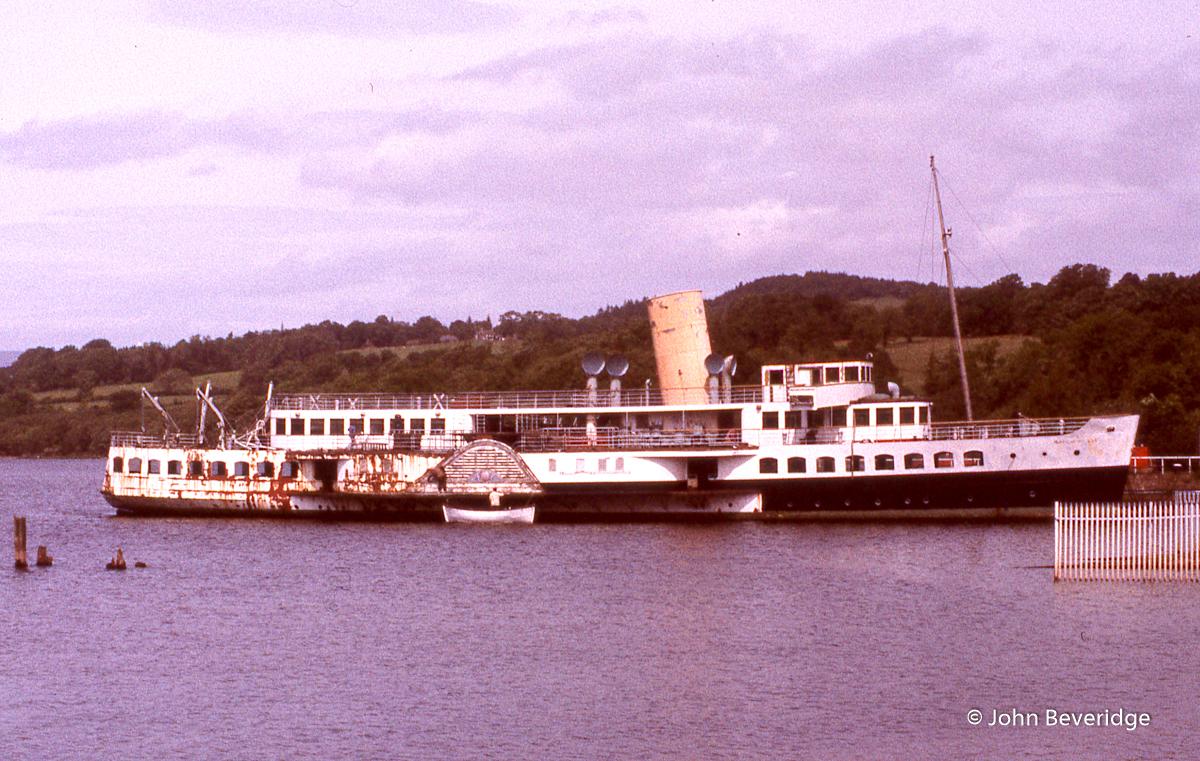
Repainting into the new livery of black hull in June 1993. Her aft end has red primer applied and volunteers are painting along the paddlebox
However, I was not satisfied with just making her look good again. I wanted something that would make her different from before and get more noticed. And so the idea of a black hull and a red funnel with a black top was born. The result was transformational and front page news again. As a council official I had to take a back seat to avoid appearing in the news, so while I wrote the script others appeared in photos and in print.
All the excellent TV and media headlines undoubtedly helped persuade the councillors that saving the ‘Maid’ was worthwhile, and once again the publicity produced a surprise. I received an anonymous phone call at home one dark October night offering the return of the steamer’s bell. I was to drive to Helensburgh pier car park and it would be handed over. Was it a hoax or even a threat? My wife was concerned but I could not resist the chance of recovering the bell from the ‘Maid’. The car park was deserted and pitch black, a car sped up, a man jumped out and opened the boot and asked if this was really Maid of the Loch’s bell. It was. He handed it to me and sped off before I could put the bell in my boot.
The work parties were so enthused that they carried on for the rest of the time I was involved. And I found in Michael Hughan a volunteer willing to “take charge” of the work parties. He and I got together and planned a programme of work.
We felt confident enough to hold a public “Open Day” that September, the first time the public had been allowed on board since 1981. It was a huge success and the start of many more such events. Importantly, it demonstrated the level of public support for the ship.
Behind the scenes, I was busy liaising with consultants doing the feasibility study, and all correspondence about the ‘Maid’ came to me. We had an offer to buy the ‘Maid’, and an offer from CalMac to operate her or act as ship management consultants. This was perplexing as the same letter offered to sell us Keppel as an additional vessel! While the council made it quite clear they did not want to own the vessel, I (and all the publicity) persuaded them that my idea of setting up a trust to own the ‘Maid’ was the way forward.
The long awaited report was published at the end of 1993 and came out in favour of the ‘Maid’ sailing again. This provoked good and bad publicity, and it gave the council a dilemma. So a further report was commissioned.
This led me to yet more meetings with consultants but six months later this report was favourable to an operating future for the ‘Maid’ . Local government reorganisation was to take place in early 1996 and Dumbarton District Council was to disappear, merging with Clydebank District Council so the council became preoccupied with the reorganisation. My negotiations with the political parties and the council legal team to push for a trust slowed, but a decision on Maid of the Loch’s future had to be taken in the next few months.
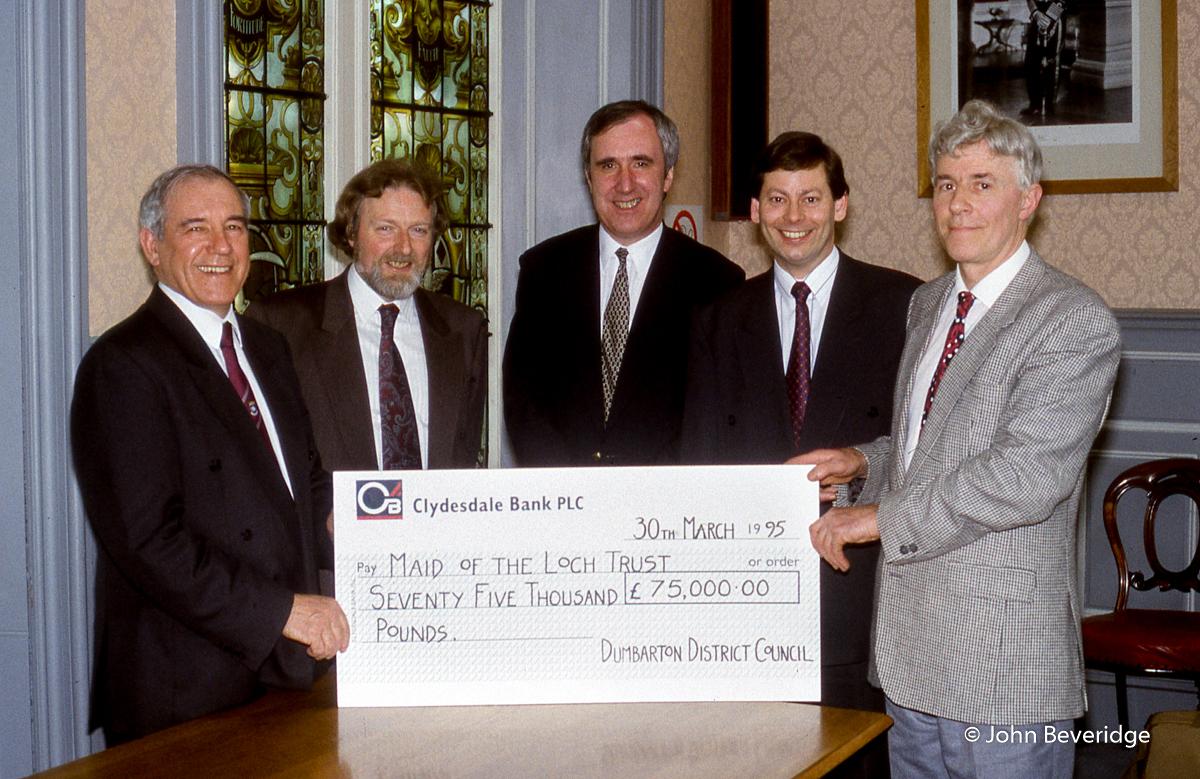
The historic handover of the Maid and a cheque for £75,000 from Dumbarton District Council to the Maid of the Loch Trust on 30th March 1995 with Trustees Provost Pat O’Neill, Councillor Bill MacKechnie, James Fraser, John Beveridge, and Michael Hughan
In January 1995 the council resolved to “create a trust or other legal entity” and to continue security until the trust was formed. On 30th, council nominees were Provost O’Neill, Councillor MacKechnie, and myself; PSPS representative (Michael Hughan); and a tourism professional (James Fraser). The Maid of the Loch Trust was given £75,000 towards the cost of security, insurance, and maintenance. Ownership transfer of the ‘Maid’ would be agreed if the Trust could raise £200,000.
1995 was an important year for me. I was elected President of my professional Institute, the first time someone from Dumbarton had received that honour. The Provost and my convenor both attended our annual conference and were there to hear my presidential address. Some months later I was unsuccessful in securing the new director post so maybe my presidential address had not helped! That meant I had to start applying for jobs all round the country. At the same time, only really Michael and myself were doing the work for the Trust.
We were fortunate to find Ian Burrows (who became our Marine Superintendent), Alistair MacLeod (who took responsibility for our finances), a solicitor, and a naval architect. Ian also lived in Helensburgh so he and I met at his house, while Michael and I met up with Alistair at his office in Langbank. We had to raise a considerable sum, but applications to the Millennium Fund and for European funding were unsuccessful. We had agreed that we would need to transfer ownership from the Trust to a charity to benefit from tax and public support. Alistair, Michael, and I debated the name for a long time. We eventually agreed on the Loch Lomond Steamship Company and this was incorporated on 9th October 1995. By November we had raised £205,000.
With political support I prepared a report to a meeting of the full Dumbarton Council on 23rd November which requested the transfer of Maid of the Loch to the Maid of the Loch Trust as the target of £200,000 had been reached, and the transfer of £175,000 to the Trust from council funds before the council was wound up on 31st March 1995. Both recommendations were agreed. Ownership of Maid of the Loch passed to the Trust on 4th December. On 16th December I started a new job as a Director with the Scottish Environment Protection Agency.
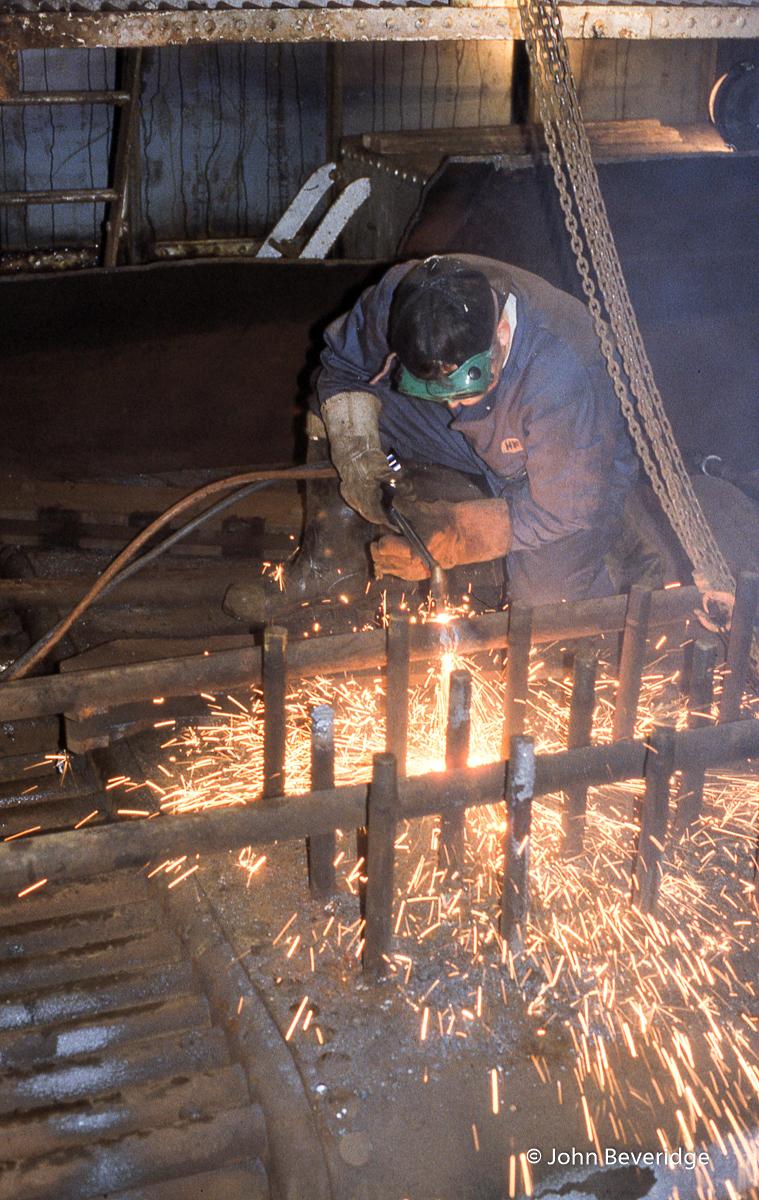
Work on dismantling the boiler in October 1996
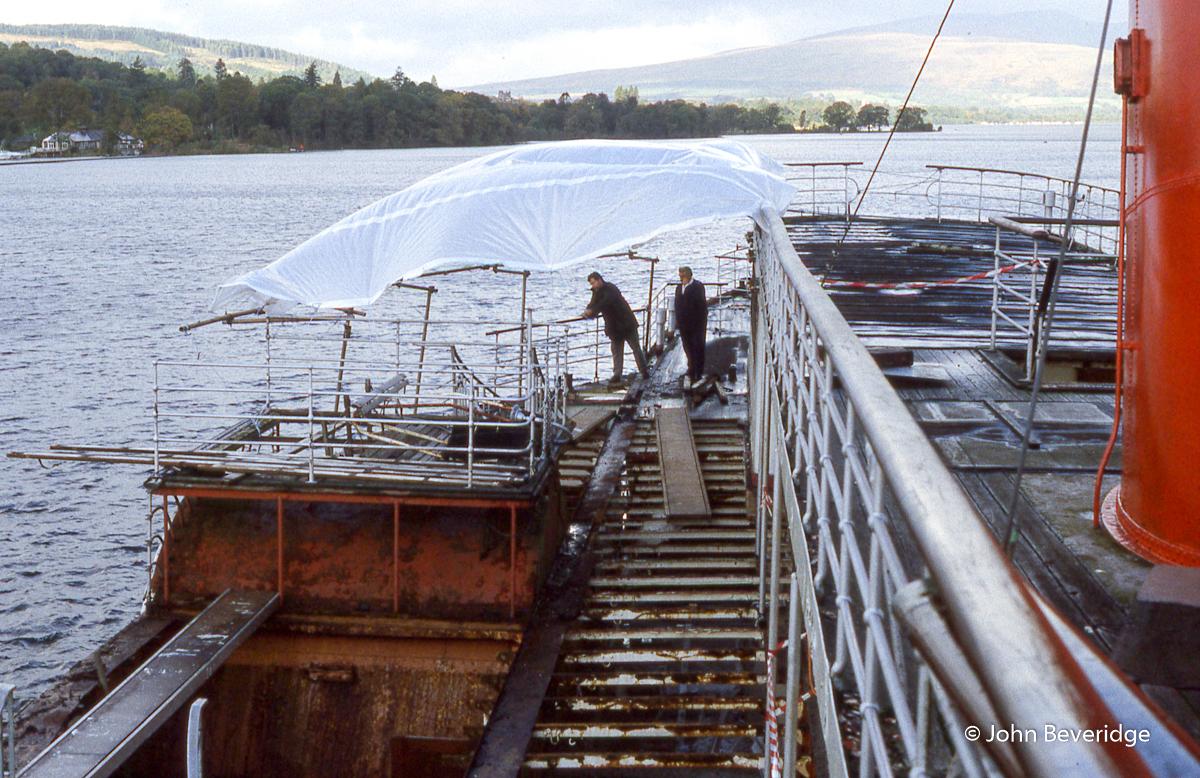
The contract to replace the wood promenade deck with steel was placed in the Autumn of 1996. This shows the starboard side looking aft from the bridge wing in October, with the decking removed as far as the aft deck. Measures to protect the workforce from Loch Lomond weather proved unsuccessful!
If you have enjoyed reading this article and want to read more of this exclusive story, but have not yet joined CRSC, then why not take advantage of our introductory offer and become a member? Your first year will be at the discounted rate of just £15 (usually £35), and full details can be found here.
In addition to being able to access Members Only posts on the website, new members receive a welcome pack which includes the current syllabus of meetings and the latest editions of our two publications — the magazine CLYDE STEAMERS and the REVIEW. As well as receiving both publications free each year, members can take advantage of discounted prices for our organised cruises and benefit from special rates for shop items. Joining CRSC will bring you in contact with like-minded steamer and ferry enthusiasts, especially at our popular meetings and excursions.
Published on 8 May 2026