
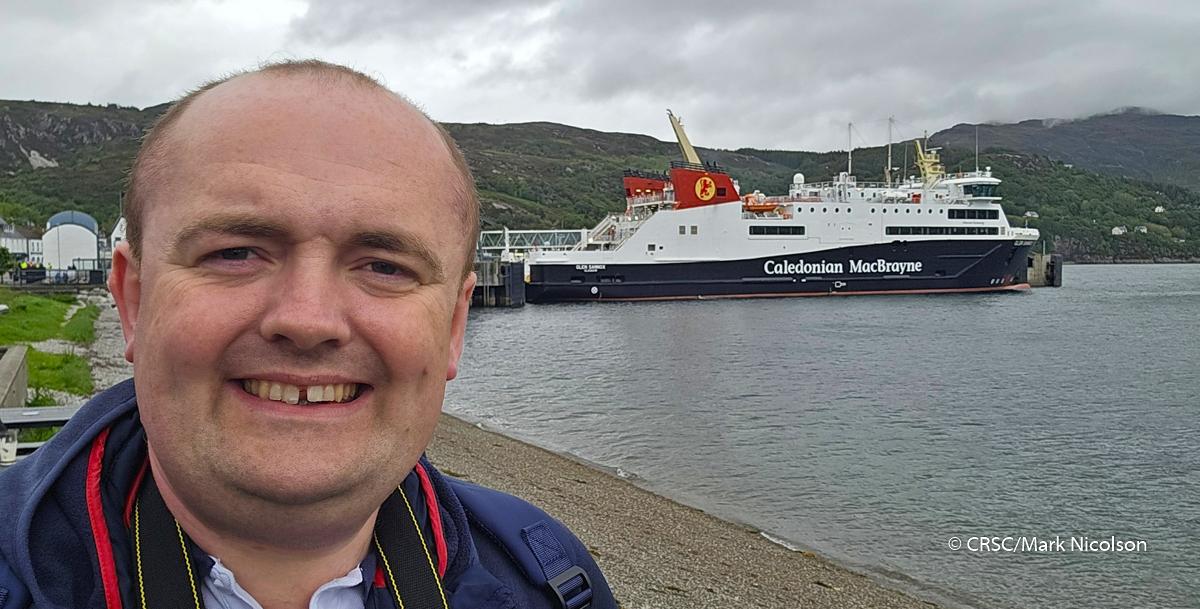
Mark Nicolson at Ullapool after his crossing aboard Glen Sannox
Lewis resident and Club member Mark Nicolson recently took advantage of the new Glen Sannox on a sailing from Stornoway across the Minch to Ullapool, and describes his experience here.
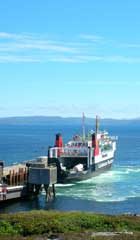
While much of Scotland was focused on the national football team preparing for its first World Cup match in 28 years, I had very different plans for the weekend. On Saturday 13 June I was heading for a CalMac sailing. Glen Sannox was due to operate an extra round trip between Stornoway and Ullapool because Loch Seaforth required essential maintenance, and operating on an amended timetable with a longer afternoon turnaround at Stornoway. I had only sailed on Glen Sannox once before, from Troon to Brodick in May 2025, and so the chance to sample her on the Minch was completely irresistible.
The first half of 2026 had been hugely contentious for CalMac, with as many as eight ships out of action at one stage. With no dedicated spare vessel, much of the fleet had been shuffled around the network to keep services running. The arrival of Isle of Islay and the return of ships from delayed overhauls eased matters, but the situation remained sensitive. Against that background, the £200 million Glen Sannox was based at Stornoway for the summer as a “hot standby” vessel, a decision that has divided opinion.
Her own recent history had also been eventful. After major post-overhaul issues affected services on her home Arran route, Glen Sannox covered at both Stornoway and Castlebay from April until June. Her time on the Barra service was a success, and she won respect from islanders who were sorry to see her leave. Once Isle of Lewis returned from overhaul at Aberdeen, Glen Sannox departed, underwent further assessments and trials at Arran, and then headed west again. She later completed successful berthing trials at Uig, Lochmaddy and Tarbert, assessments that had been postponed since March because of her earlier snags.
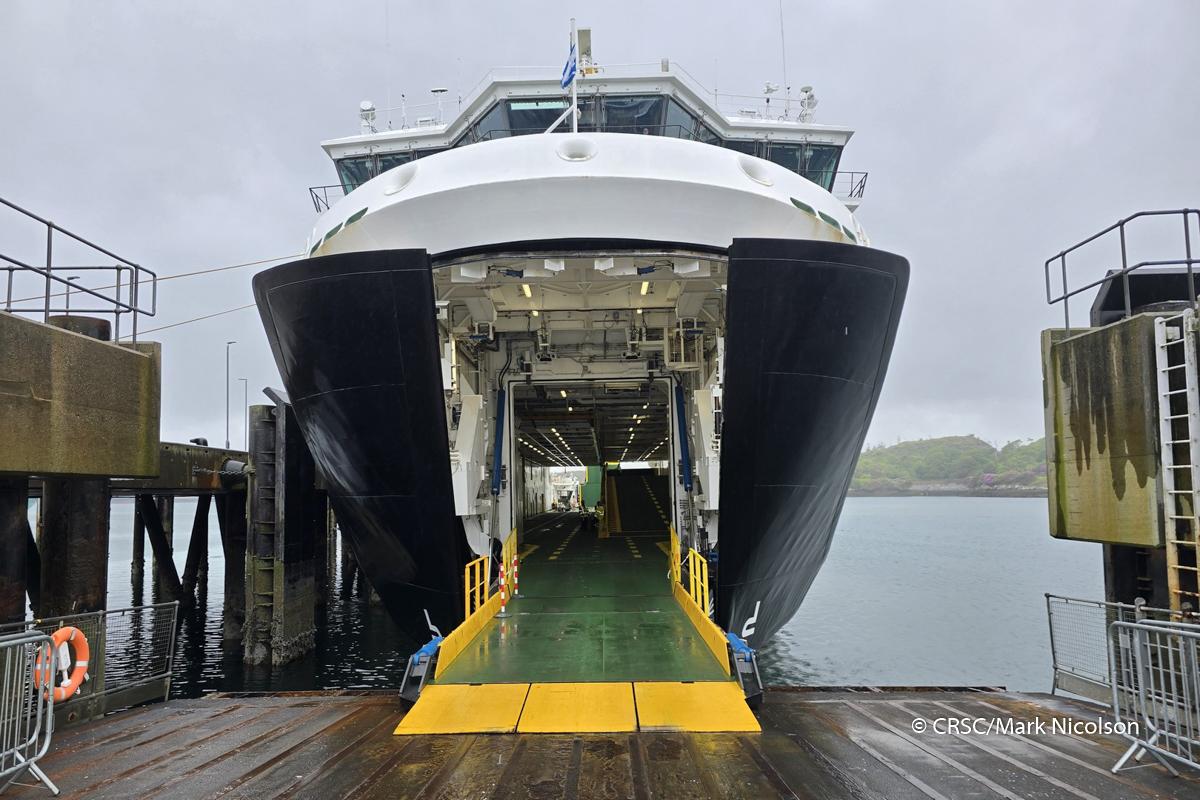
Looking through the ‘Sannox’: the port mezzanine deck lowered for use
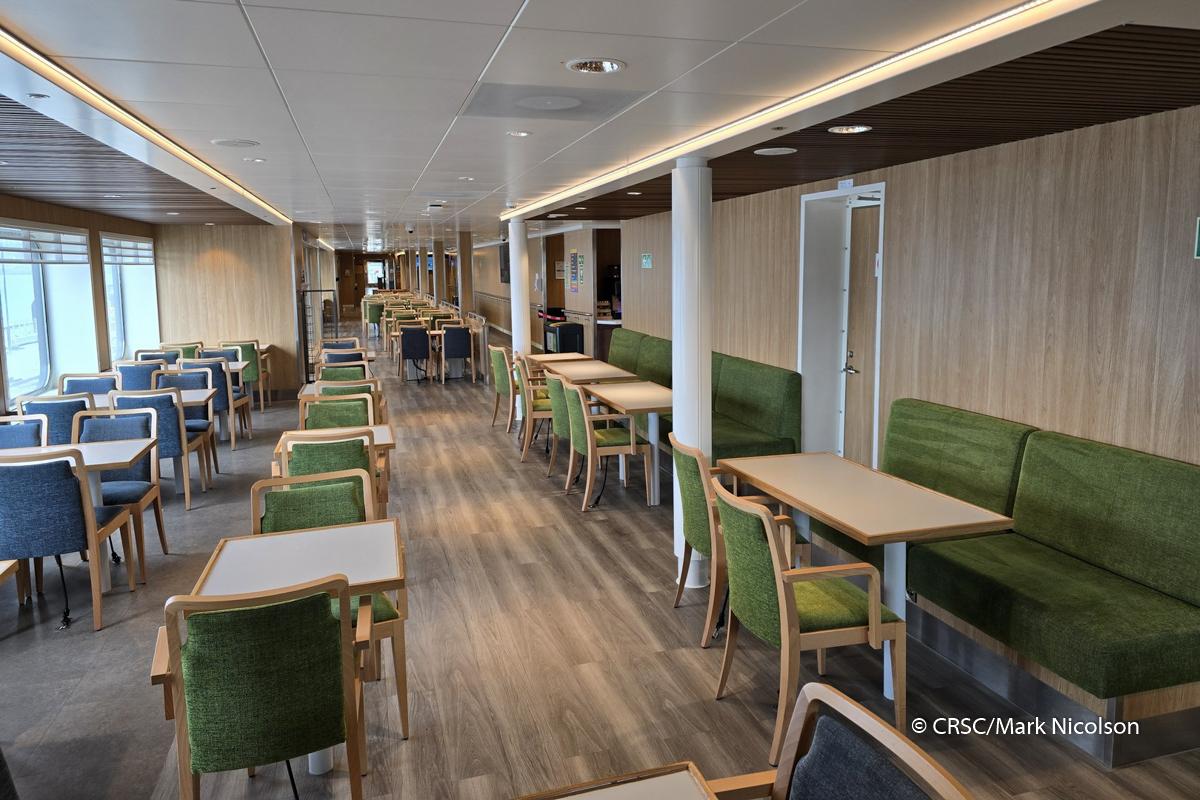
Looking aft as an empty Mariners cafeteria awaits hungry passengers
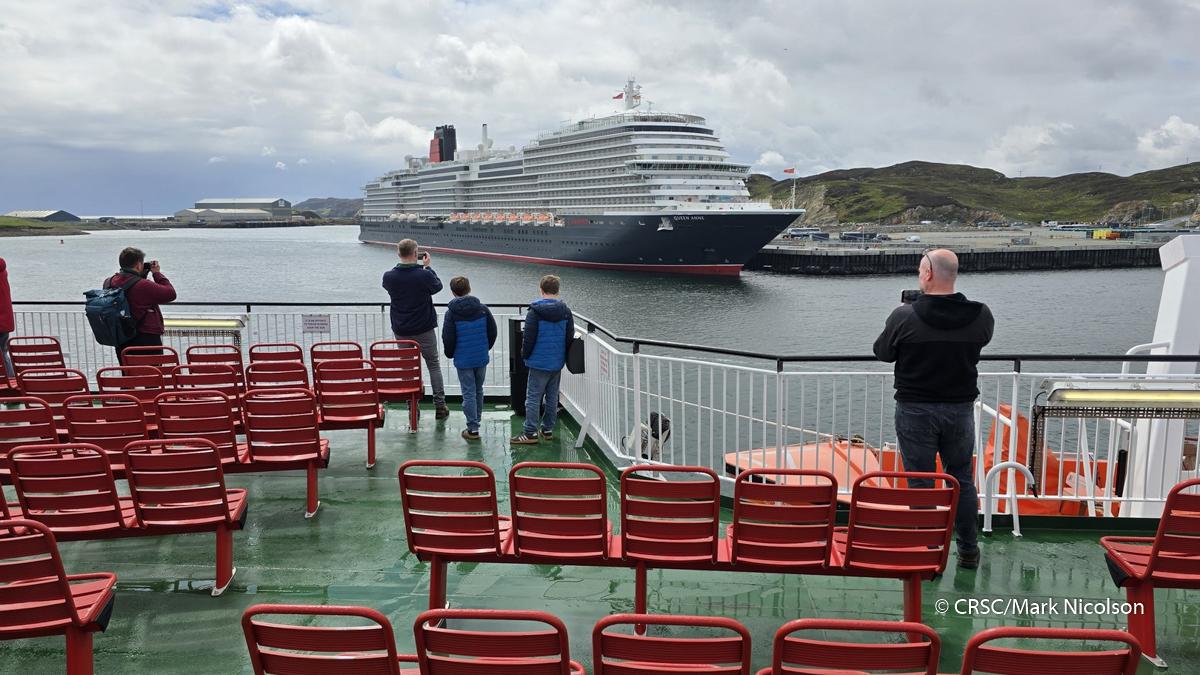
Passing Cunard’s Queen Anne at Arnish Deep Water Terminal
Once on board, I spent the time before the 12:30 departure taking as many interior photographs as I could. The outward sailing was fairly busy, busy enough for the port mezzanine deck to be deployed. Three blasts on the whistle sounded before Glen Sannox went astern, waiting for a passing yacht to clear the water behind us. I remembered the harsh vibration I had felt from my first sailing on her, but this time manoeuvring seemed to be much smoother, something improved by extra steelwork at the stern. As we moved away, passengers enjoyed views of the huge Queen Anne at Arnish, with her passengers being bussed to and from town, while the inbound Loch Seaforth passed soon after we had cleared the bay beyond Arnish lighthouse.
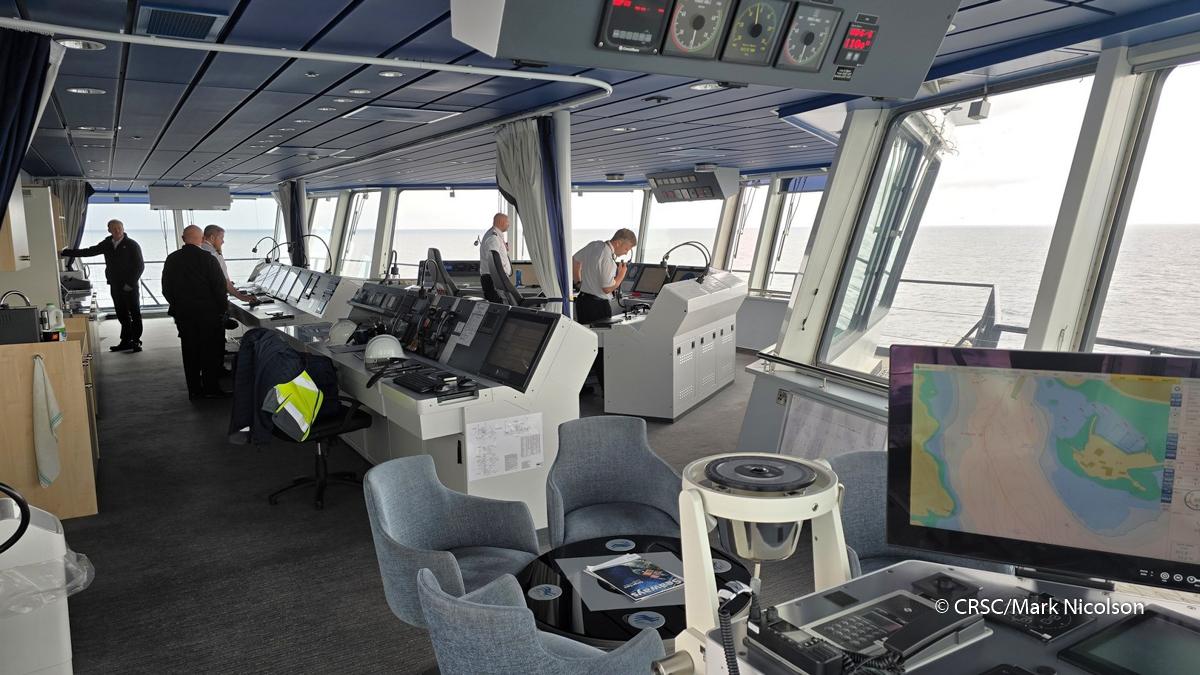
The futuristic yet sociable layout of the bridge
Once out at sea, the day became even better. Karin McNair, the excellent onboard service manager, kindly followed up an earlier request I had made of the captain and crew by escorting me up to the bridge for the first time. There I received a warm welcome from Captain Tobi Sogl and Chief Officer Murdaine Macleod, from Skye and Lewis respectively, while other officers on watch included third mates Shane and Fionnlaigh and quartermaster Jason. We spent time discussing the technicalities of Glen Sannox’s recent berthing trials on the Uig triangle route, all of which had gone successfully. The chief officer explained that the bridge team keeps a special folder for every port she has been trialled at, recording sensible approaches and berthing strategies, even down to yellow marks on pier edges that line up with the stripe painted on the vessel’s upper forward belting underneath the glass panels set into the bridge wing decks. I was fascinated by the wheelhouse, which feels futuristic yet sociable. There was even a table and chairs on the bridge for crew and visitors which made the space feel welcoming, and although the engines are intended to use LNG in future, she was operating only on diesel that day as the engineers explained to me.
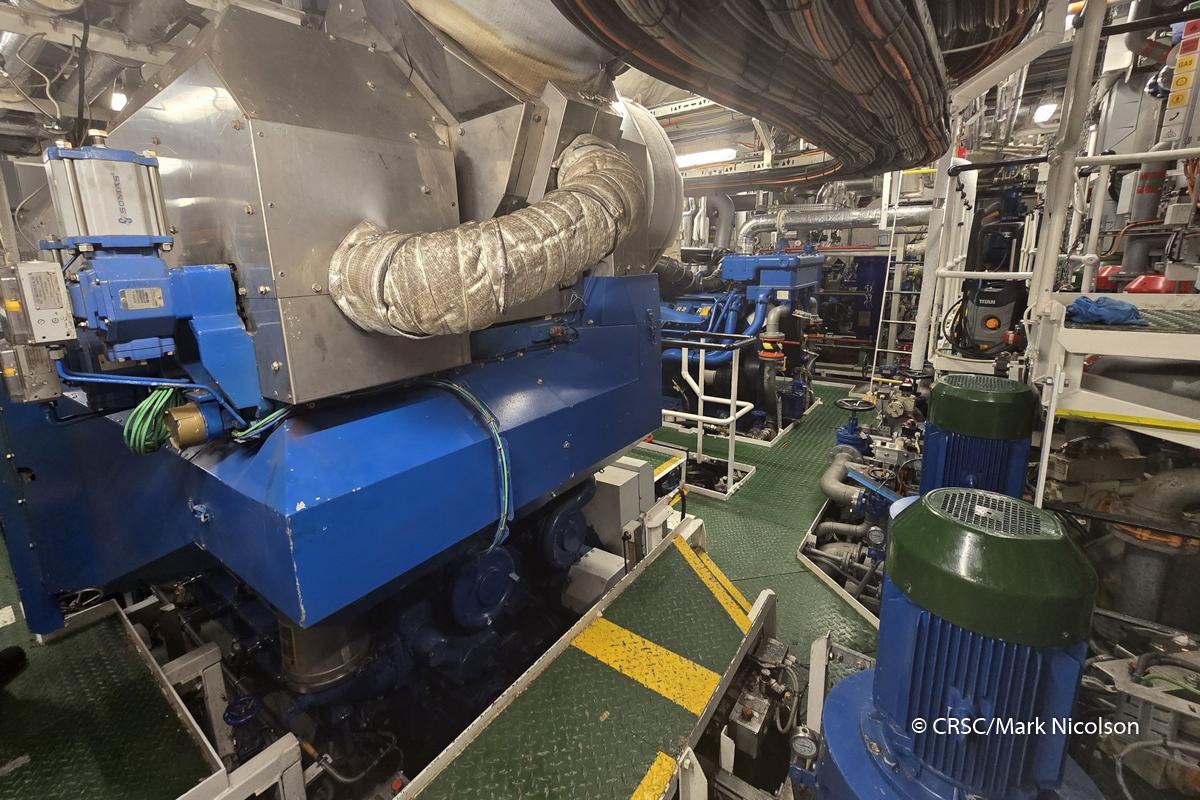
A view of the engine room, packed full of machinery
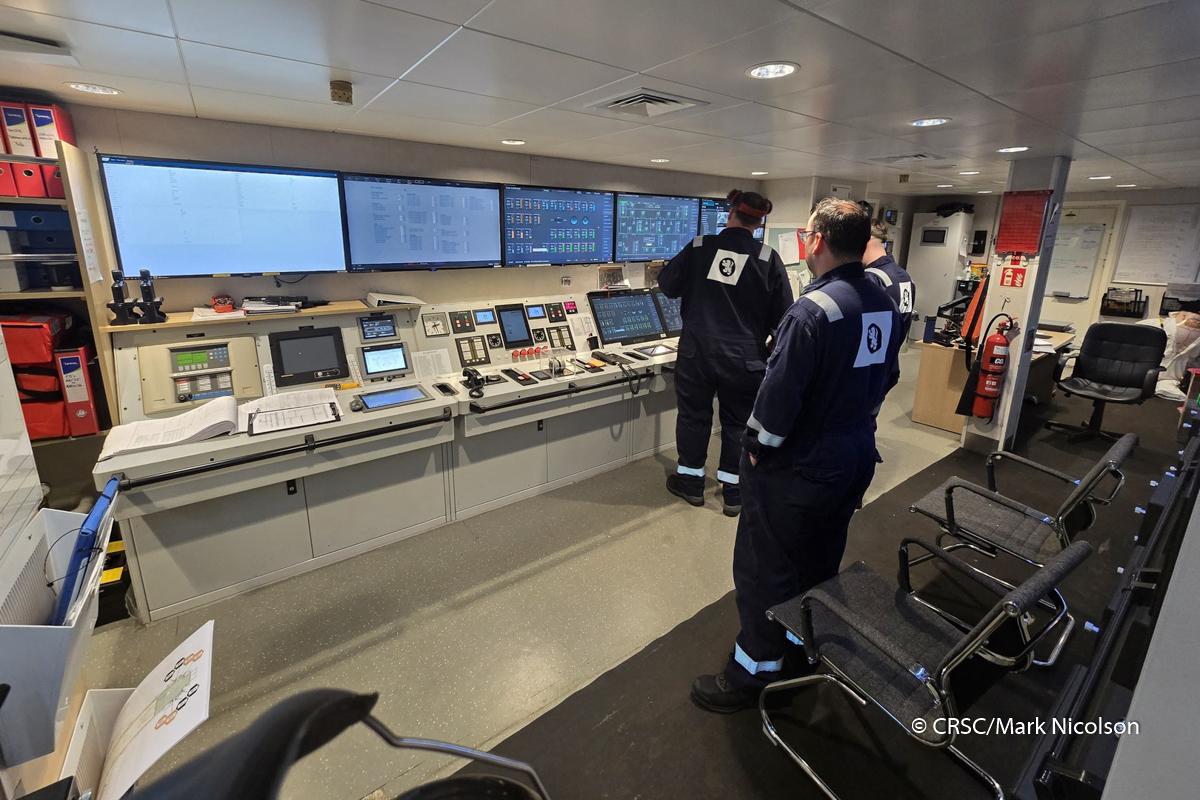
A plethora of digital screens in the Engine Control Room
The kindness continued when third engineer Paul invited me down to the engine room. Glen Sannox is powered by two Wartsila 34DF dual fuel main engines, and I was shown their working parts and the distinctive digital display unit for each. The engine room has been criticised for being cramped, and seeing it only increased my admiration for the engineers who work so professionally in that space, even if the main control room offers a little more room to breathe. They really are heroes.
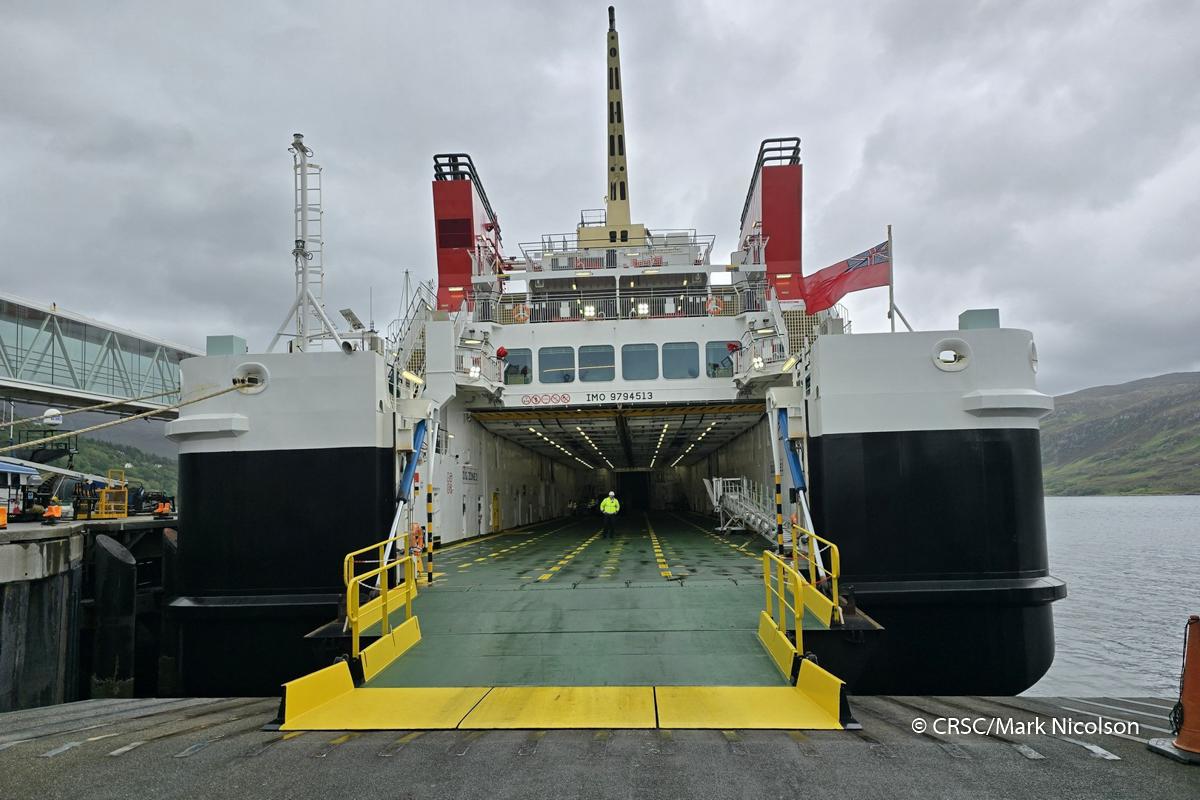
Re-boarding Glen Sannox at Ullapool via the stern ramp
After presenting the bridge team with a dozen specially printed photographs of their ship, I headed back downstairs as the bridge entered the ‘red zone’ for approach and arrival at Ullapool at 15:30. I went ashore for the obligatory photographs, and once again foot passengers had to use the vehicle deck because the gangway was not set up while Loch Seaforth was still sailing.
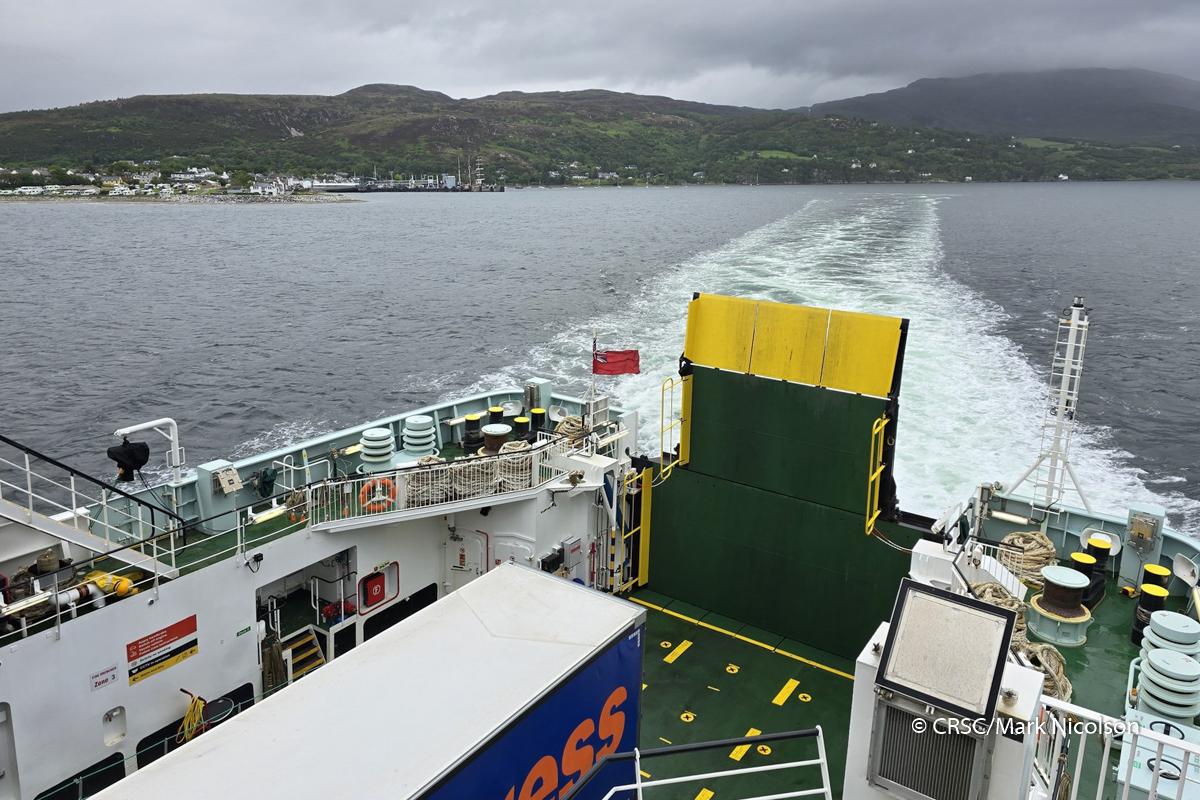
Ullapool lies astern as Glen Sannox accelerates down Loch Broom
The return sailing at 16:30 was much quieter, with only a handful of vehicles, a small number of passengers and just one articulated lorry on board. Once clear of the pierhead, Glen Sannox accelerated briskly down Loch Broom to her 16.5 knot service speed, and her lower gross tonnage and displacement compared with Loch Seaforth were obvious in the way she gathered speed. I then made for the Mariners cafeteria and ordered my usual favourite, steak pie, chips and peas, sitting right at the front of the ship. Afterwards I relaxed in the upper observation lounge and paid close attention to her sea keeping. A fresh north westerly breeze was enough to raise a modest swell and occasional waves passed the windows, but I came to the firm conclusion that Glen Sannox is a very comfortable sea boat indeed.
By the end of the crossing, I found myself thinking about how well her passenger layout would suit the Ullapool to Stornoway route if vessels of this design were ever used in a two ship shuttle. I particularly liked the open deck areas, especially the lower one, which is largely sheltered yet still gives fresh air and a fine stern view, a comfort to unnerving passengers on a windy day without looking ahead. By contrast, Loch Seaforth has suffered from the closing off of her port side passenger deck because the galley is located there. My only real criticism of Glen Sannox concerns the heavy doors leading to the open decks, together with the lack of an internal stair directly into the lower sheltered seating area. I actually found using the lift easier.
Arriving back at Stornoway
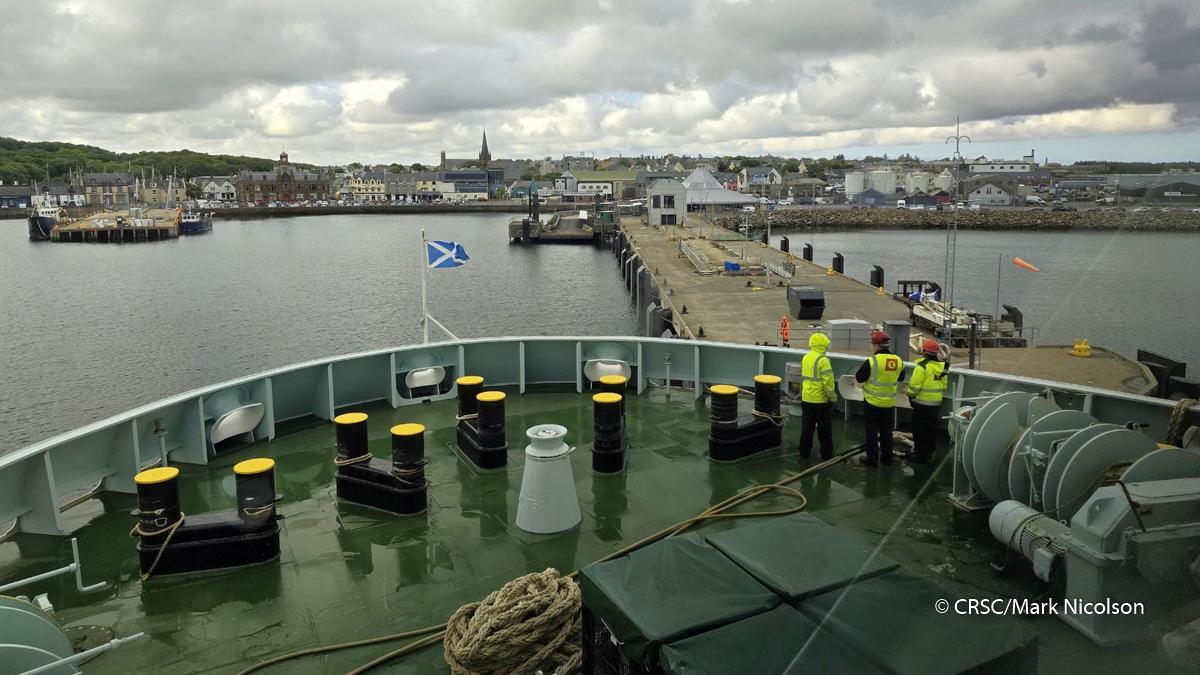
During the last half hour before we reached Stornoway, I noticed Queen Anne finally leaving harbour for Killybegs, making an impressive sight as she slipped down past the east coast of Lewis. Against that backdrop, Glen Sannox made a composed and very quiet approach to Stornoway. One of the most striking things about her is how silent she is in port. You can sit almost anywhere in the passenger accommodation and hear little more than a gentle hum, with the bow thrusters barely noticeable. We arrived right on time at 19:30 after an exceptionally smooth three hour crossing. Because the vehicle deck was lightly loaded, disembarkation as a foot passenger was quicker than usual, although at the time of writing the tender for a replacement access system had still not been awarded by Stornoway Port Authority. With Loch Seaforth still around two hours away, I had time to photograph Glen Sannox alongside at the linkspan, watch her move back to the eastern berth at Number 3 pier, walk a lap between the two, and then capture two of CalMac’s largest ships together as the sun went down. It was the perfect ending to a perfect day.
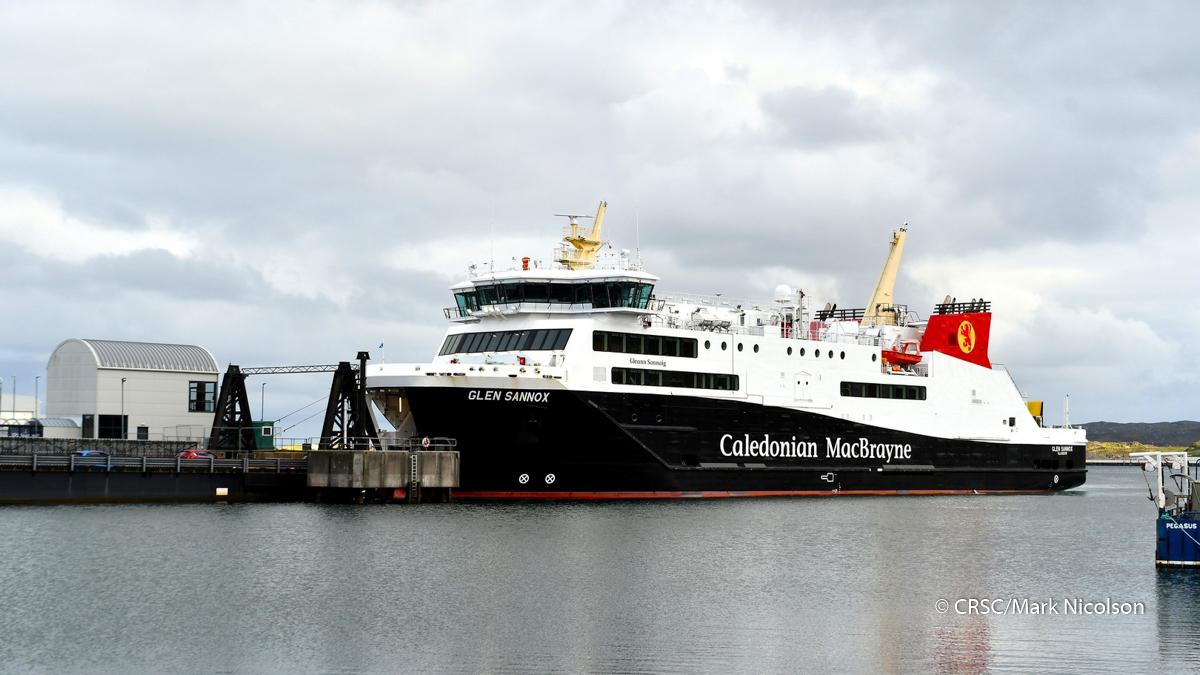
Glen Sannox at No 3 Pier linkspan berth
After my debut round trip on Glen Sannox on Scotland’s most north-westerly ferry service, I came away convinced that if two purpose-built vessels had been ordered for Stornoway over the last decade, instead of relying on a single round-the-clock ship in Loch Seaforth, then something of Glen Sannox’s specification, without the controversial dual fuel arrangement and modified for about nineteen knots, might have worked very well as a North Minch shuttle.
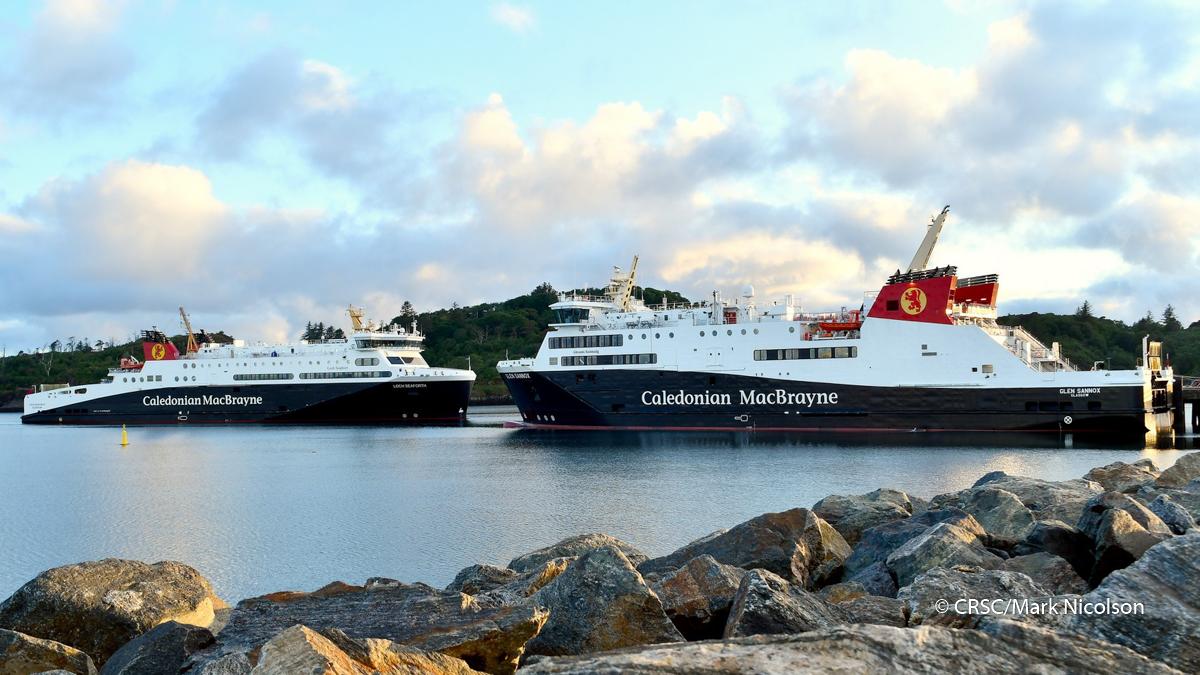
CalMac’s two largest ships together, as Loch Seaforth returns from her Minch crossing – Mark is convinced that a pair of ships of a size similar to Glen Sannox might have been better for Stornoway
In theory, four daily return trips split between two ships, with departures from each port at the same times, could perhaps eliminate the need for an overnight freight service and make life easier for local hauliers. Whether that could work in practice remains to be seen, but Lewis certainly generates enough passenger and freight traffic to make the idea worth trialling. Above all, though, I left feeling that I had found a new favourite in the fleet. After her chequered history so far, I sincerely hope Glen Sannox can finally settle down and become the essential asset she was always meant to be. As I found on this trip, she is fully at her best on a long deep sea route, and I hope she enjoys a long and happy career.