A Week’s Holiday in Orkney – Part Four


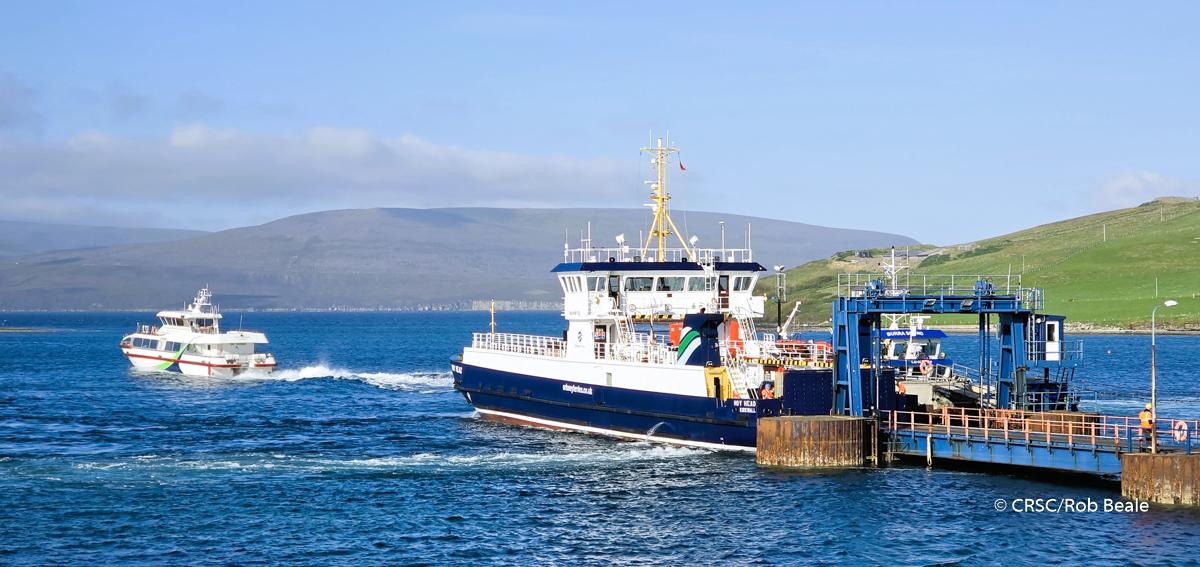
The terminal at Houton not only serves Orkney Ferries’ Hoy Head but also vessels such as Flotta Lass, seen leaving with staff for the nearby Flotta oil terminal

Part Four : The South Isles

Having spent two days visiting some of the North Isles, Rob Beale and his family next turned their attention to the South Isles in this continuing story of their recent holiday in Orkney.
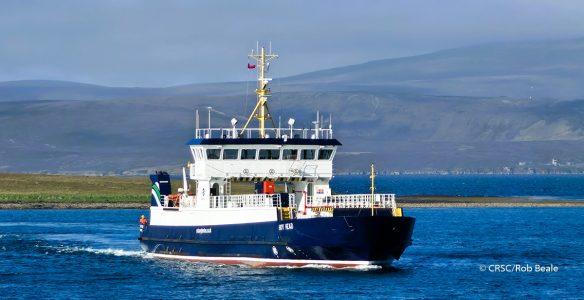
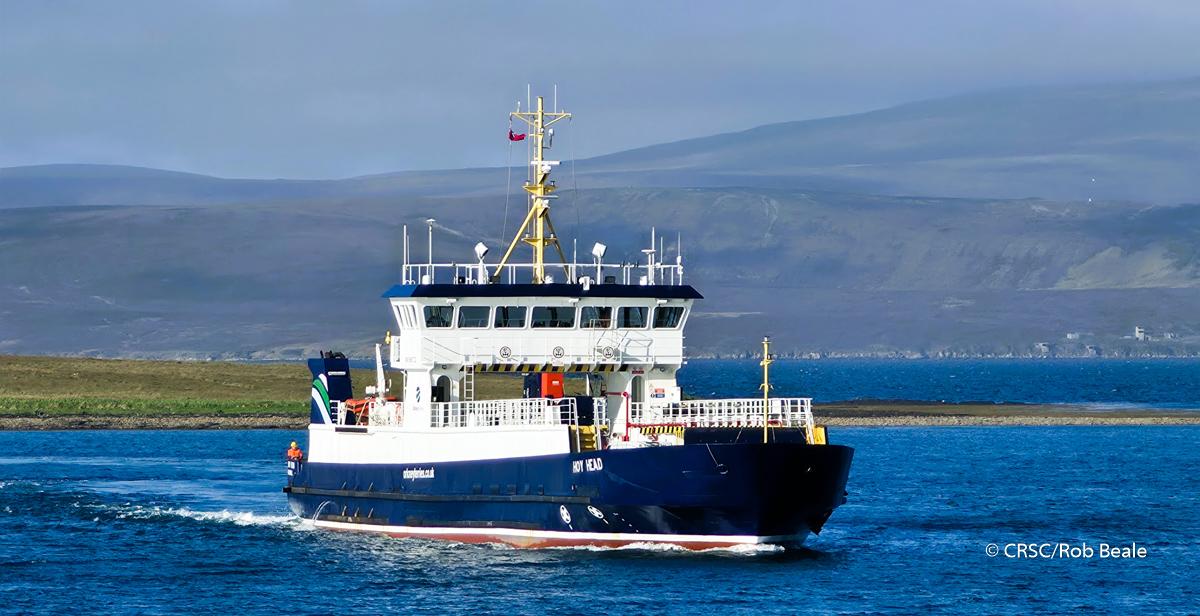
Approaching from Lyness, Hoy Head makes her way to the ferry terminal at Houton

Thursday continued the theme of bright blue skies, but it was accompanied by a brisk wind. I planned another quick morning trip along a route we wouldn’t have time to take as a family. Leaving our cottage at 07:30, I drove the seven minutes to Houton with one of my sons, leaving the car at the ferry terminal. The ferry from Houton serves two islands, Flotta and Hoy, usually operating a triangular service, but occasionally just sailing between Houton and Hoy. I was surprised by the number of vehicles there and expected Hoy Head to be very busy.

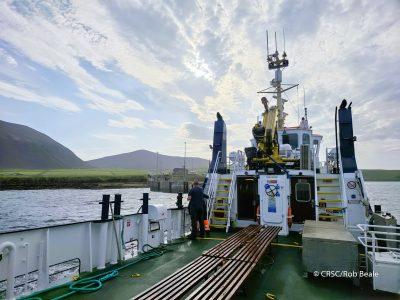
Just before 07:45, she steered into the Bay of Houton, between the headlands of the Holm of Houton and Midland Ness. She turned to berth stern to at the linkspan and unloaded. As she did a catamaran, Flotta Lass, departed for Flotta with workers for the oil terminal. That explained the number of vehicles at the terminal. Hoy Head had been stretched since I last sailed on her. In 2013 she was lengthened by nearly 14 metres, increasing her capacity from 14 to 24 cars. Like her fleetmates operating from Kirkwall, she has a spacious, but windowless, lounge below the car deck, where my son hid, out of the wind. My reluctant dog and I braved the biting wind on the upper deck as we headed out, bound for Flotta on a 35-minute crossing. We passed east of Cava and Fara and had a great view of Western Isles, a large FPSO (floating production, storage, and offloading facility), designed to produce and store oil before it can be offloaded to a tanker.
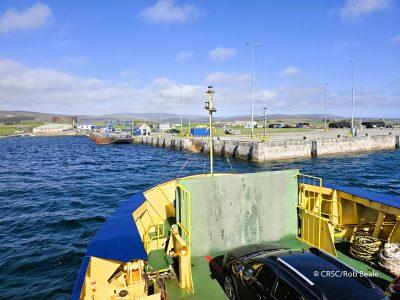
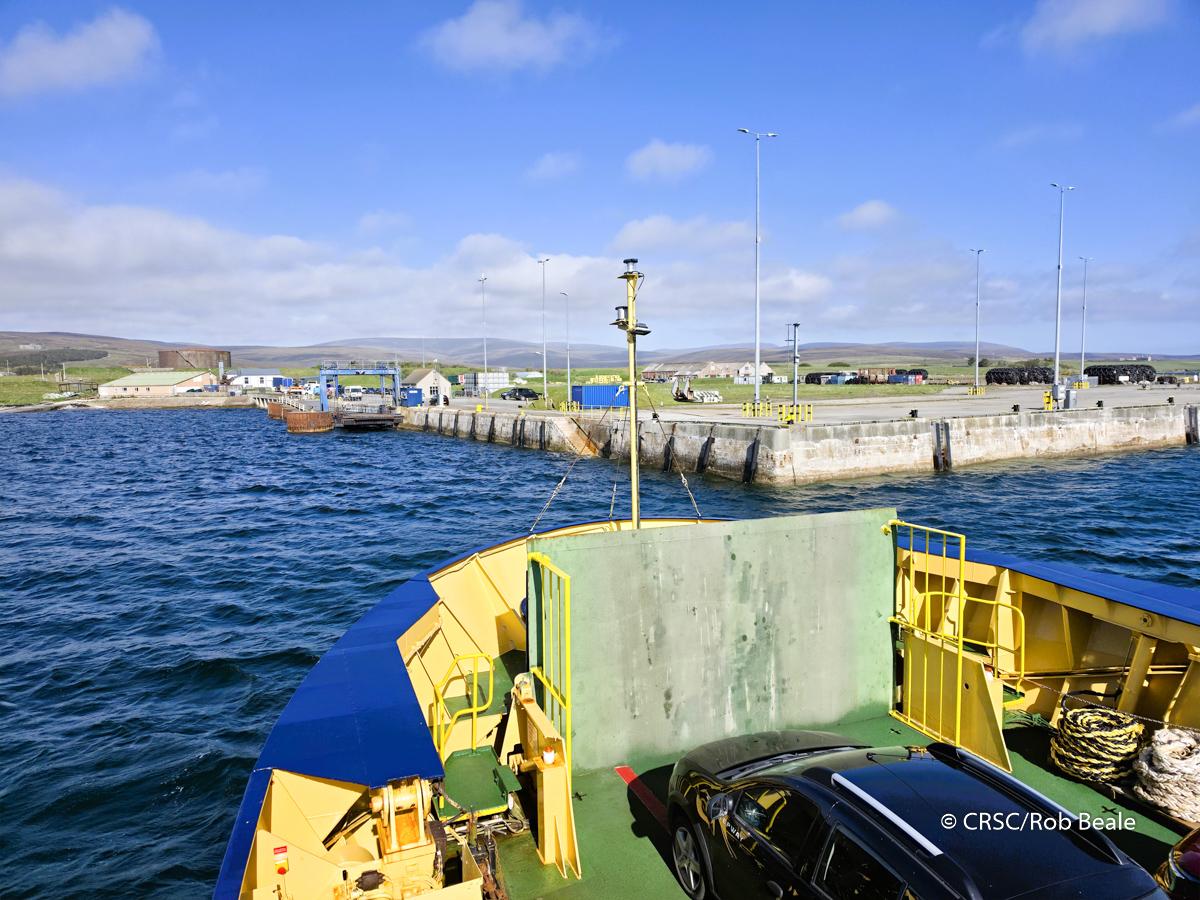
Lyness, the main entry point for Hoy, as viewed from the approaching Hoy Head

We landed bow in at 08:30 and sat alongside until 08:45. A bit of a shuffle on the car deck occurred as vehicles boarding for Houton had to be positioned behind those already on board destined for Lyness on Hoy. The skipper also took the opportunity to replenish the vessel’s fresh water tanks. I had explored Flotta extensively in 2004 and wished I had the time to disembark again, but had to settle for views of the old World War Two cinema visible from the ferry.

The next leg, across the bottom of the triangle, was shorter, passing along the southern shore of Fara and giving tantalising glimpses of Longhope off to port, on South Walls. Longhope is the only Orkney Ferries terminal I have never sailed into or out of — to do so requires an overnight stay at Longhope. Hoy Head lies there at night, and the berth has no linkspan. There is one passenger-only departure a day at 06:25 (08:00 at weekends), and one passenger-only arrival at 18:50 (17:40 or 19:55 on Sundays, depending on the time of year). One day I will take a tent and ensure I manage at least one sailing to the pier!

Before I knew it, we were approaching Lyness on Hoy. With the wind now across us, instead of head on, my son joined me on deck, and we watched the vehicle exchange at the linkspan. Lyness is a great destination, home to the Scapa Flow Museum. It is also the only one of Hoy’s three ports served by Orkney Ferries that caters for vehicles. Hoy Head backed out from Lyness at 09:10 and headed up Gutter Sound, west of Fara. The wind was now behind us, and it was nearly T-shirt weather! Once past Rysa Little, the view to port opened up with the mountains of Hoy, the island of Graemsay and Stromness. We berthed back at Houton, five minutes late at 09:50 and were back at our accommodation a quarter of an hour later.
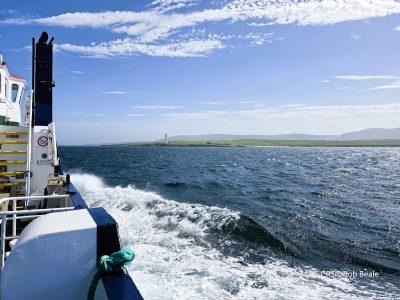
The island of Graemsay, seen from the eponymous Orkney ferry
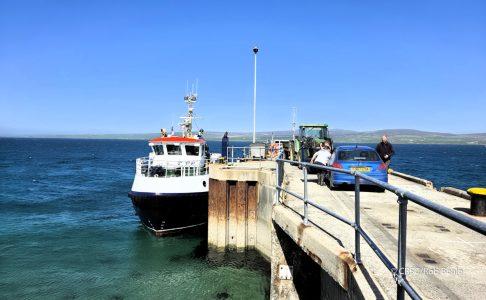
The link from Graemsay to the ‘mainland’ is provided several times a day
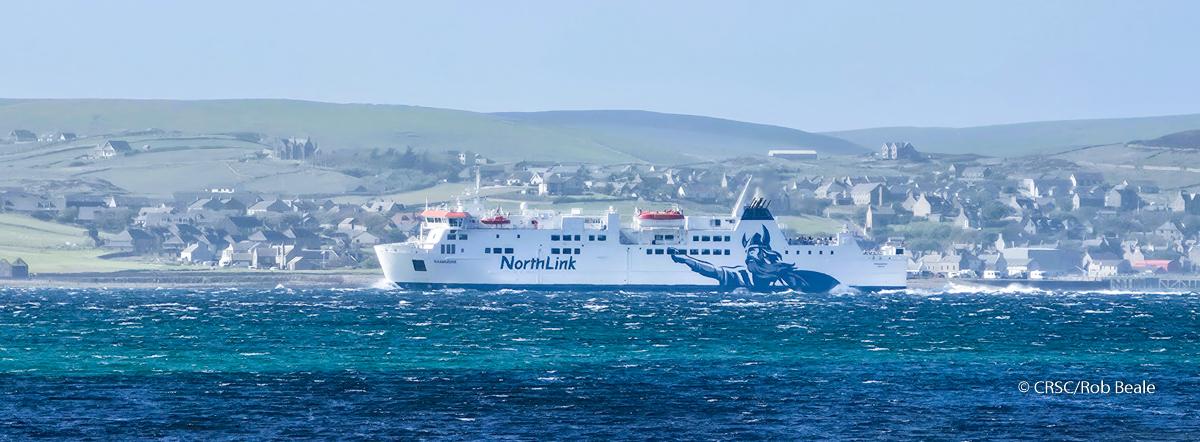
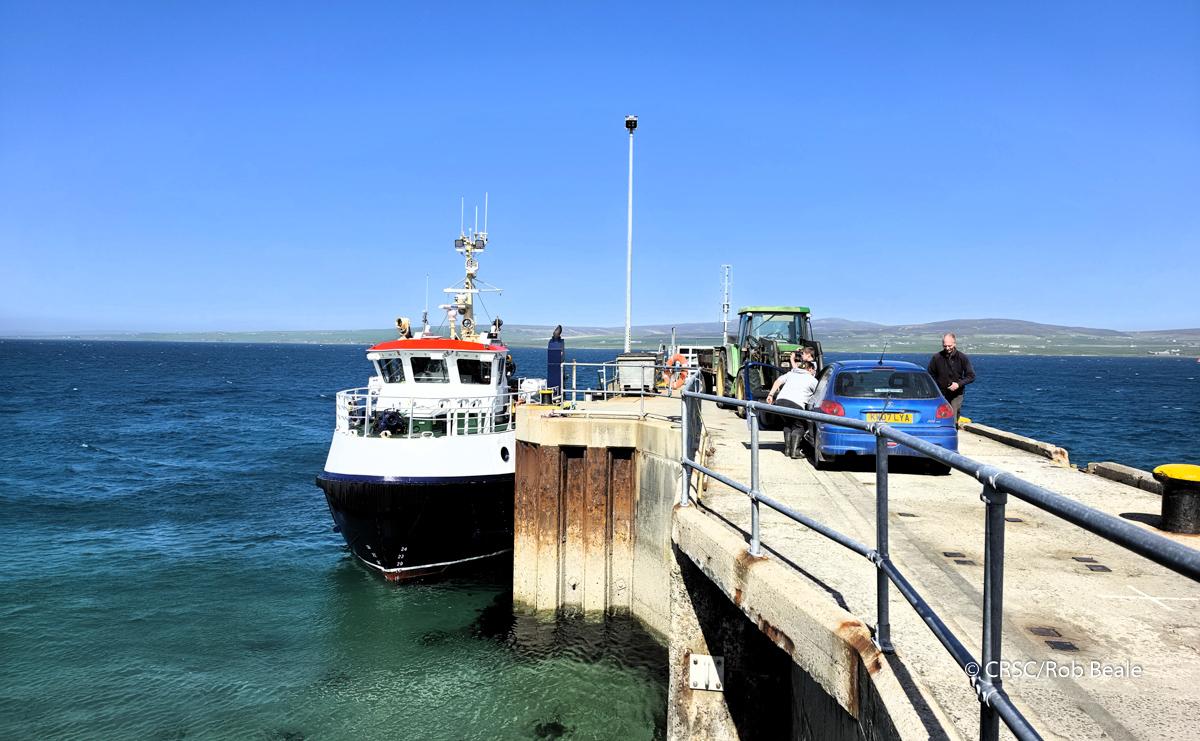
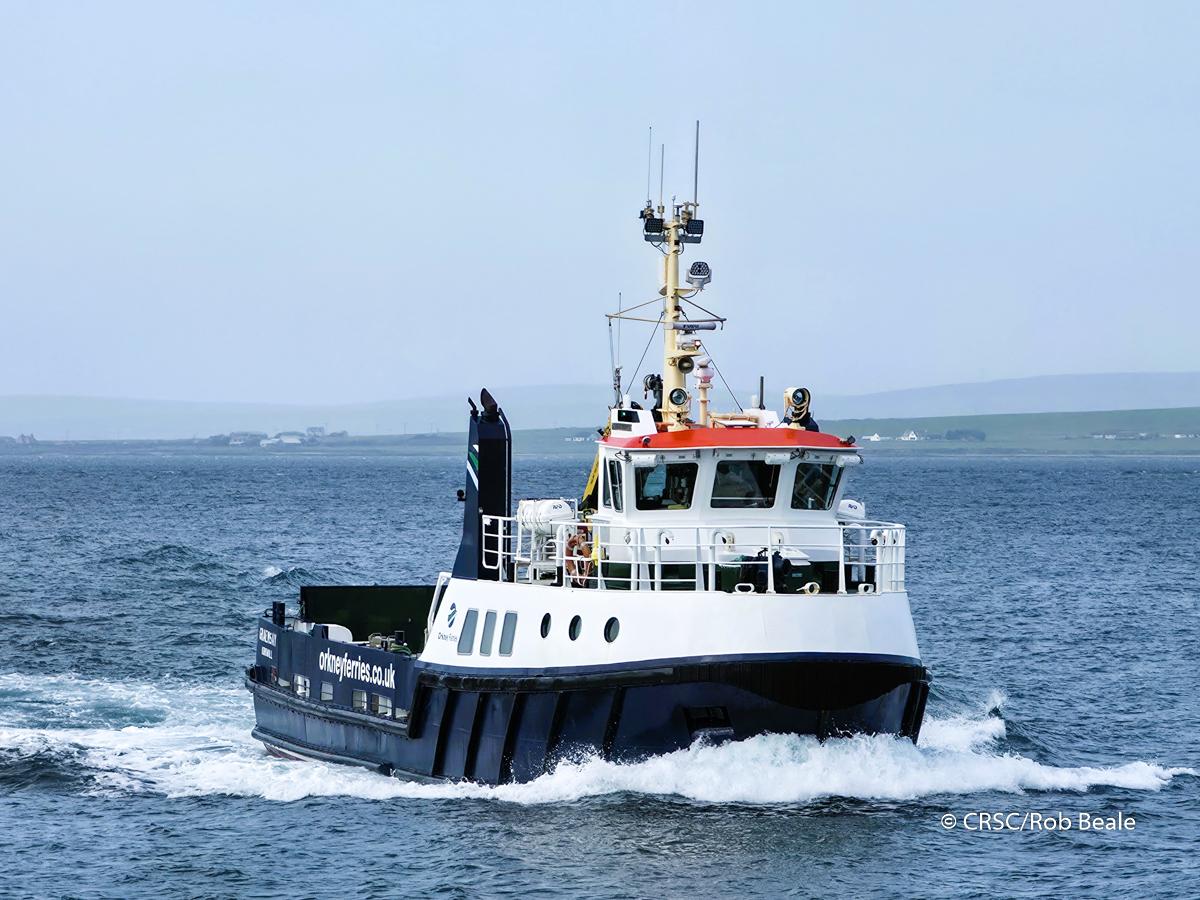
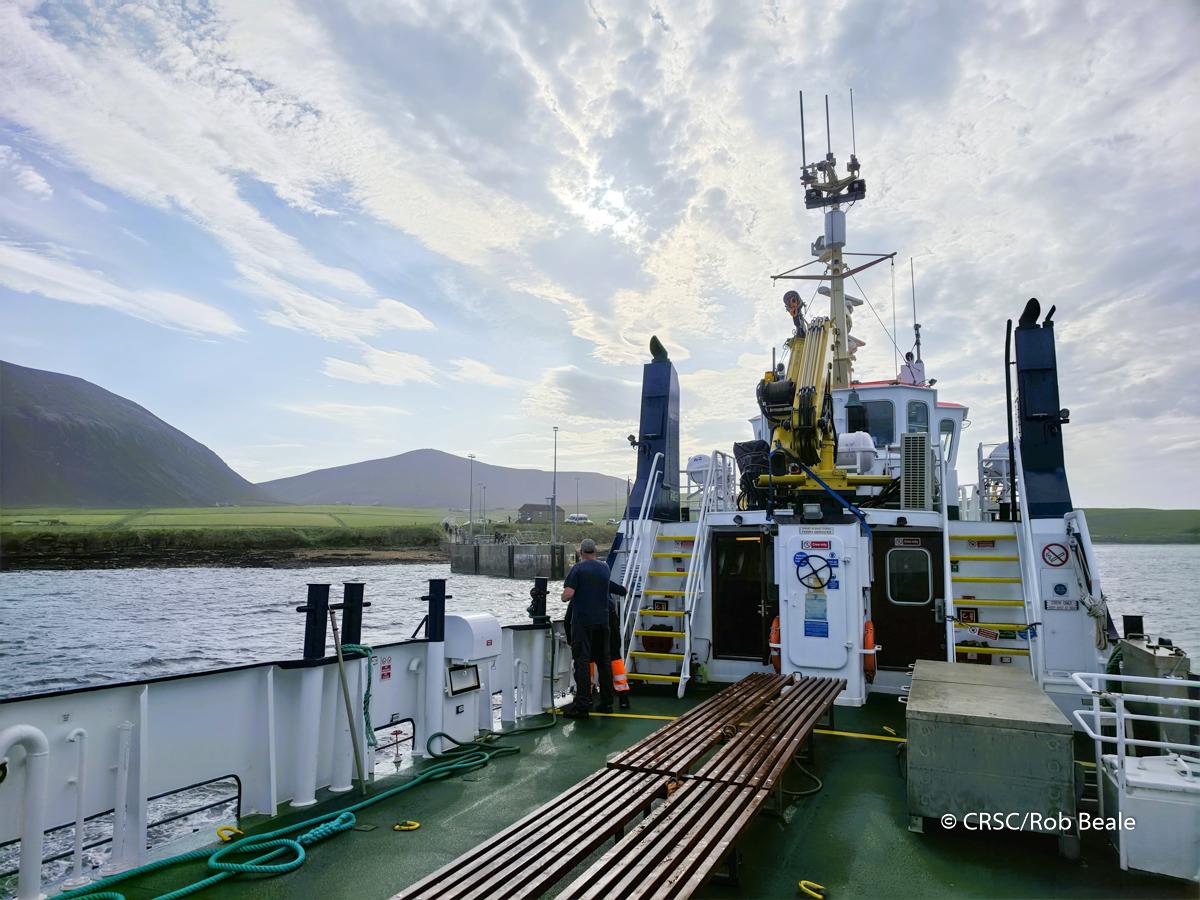
The day was then mainly spent on the mainland of Orkney, but the promise of an idyllic beach barbecue tempted my family onto another boat later in the afternoon. We found ourselves in Stromness at the Coop purchasing meat for the planned alfresco meal, and as we left the shop, Hamnavoe was berthing at the pier, in from Scrabster. She would be our final sailing of the holiday, but that was a few days away yet. Our boat for this afternoon was the diminutive Graemsay. That said, she is not quite as diminutive as she once was, having also been lengthened from 17 metres to 21.5 meters, increasing her capacity from one car to two, not that she carries any other than islander’s vehicles. Any heavy cargo must be craned aboard, as all her regular piers lack vehicular infrastructure. We found her at her loading steps and were first on for the 16:00 sailing to the island after which she is named. A few school children also joined, and then her engines were fired up. The first leg of our journey was a short hop of just over ten minutes. Once again we were heading into the wind, but the benches, bolted to the rarely used vehicle deck, were afforded some shelter by the wheelhouse. If it got too bad, her ample saloon was always an option. At 16:15 we bundled up the pier at Graemsay and watched Graemsay punch her way on around the east side of the island to her next calling point. We had two hours for our barbecue, which was sufficient, but the wind sent enough sand into the meat to give it a bit of extra ‘crunch’. Still, it was a meal with a view as we watched Hamnavoe head off to the mainland of Scotland, and saw Graemsay returning to Stromness around the west side of the island.

Northlink’s Hamnavoe makes her way out of Stromness, on the Orkney mainland, on another crossing to Scrabster, on the Scottish mainland
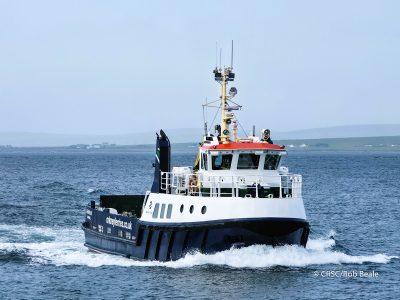
Graemsay operates a circular, passenger route from Stromness to Graemsay and Hoy. In the morning she goes anti-clockwise around Graemsay, calling at Moaness on Hoy first, and in the afternoons she goes clockwise. I think this is to accommodate the Graemsay schoolchildren so they only have a 15-minute crossing each way, rather than 45 minutes. When I was there in 2004 I hadn’t noticed this in the timetable and sailed direct between Graemsay and Stromness both ways.

Graemsay arriving back at Graemsay

This time, after our barbecue, Graemsay collected us at 18:15 and continued clockwise around the island, affording us the reverse view to that we had seen in the morning, down to Cava and Houton, before turning west towards Moaness on Hoy.

Approaching the pier at Moaness on North Hoy
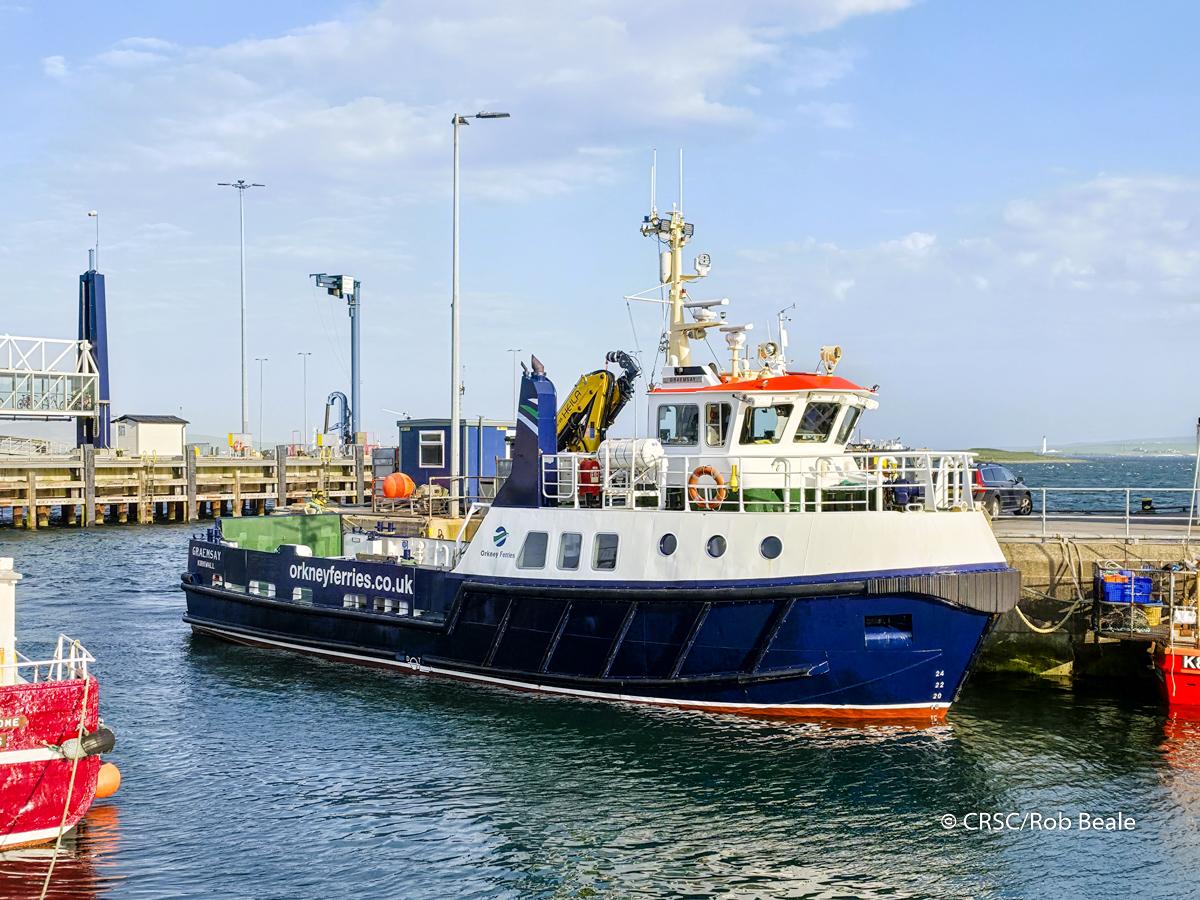
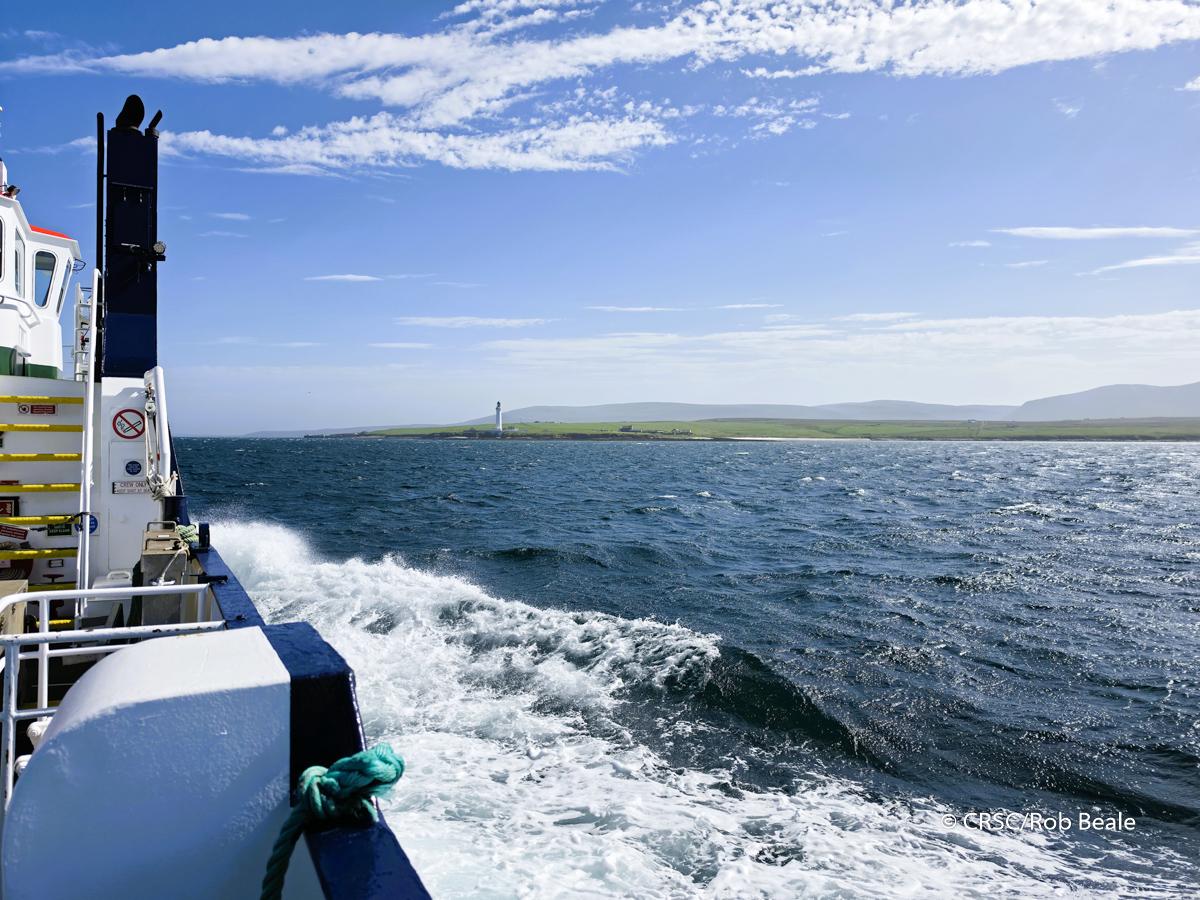
I had naively assumed this would be a quiet pick-up, but the boat filled up. Residents disembarked while walkers and rock climbers boarded. The skipper didn’t hang around, and we were soon continuing west up Burra Sound and into Hoy Sound. The water was wild in places, presumably due to currents swirling around Graemsay and meeting again. The views all around were magnificent, with highlights including the lofty mountains and cliffs of Hoy, and the lower landscape of Graemsay, complete with its lighthouses. I remained on the open after deck for the journey while my family sheltered inside, and I noticed Graemsay features a linkspan ramp at her stern. I wonder if, and where it is ever used? We arrived back in Stromness at 18:50, and returned to our cottage for the rest of the evening.

Graemsay back at her berth in Stromness

Rob has been a member of CRSC for many years. As well as being an established author in his own right, he has contributed articles to both ‘Clyde Steamers’, the annual magazine produced for members, and the CRSC website (listed below). If you too would like to join CRSC, and receive copies of our much-prized west coast shipping Review and our annual magazine, as well as being able to access a growing library of ‘Members Only’ posts on the website, then please click here.

Also by Rob Beale:

Published on 17 August 2026